What a card grade really tells you
A grade summarizes condition. The label, holder, and card still deserve a closer look. Here is how to read the details together.
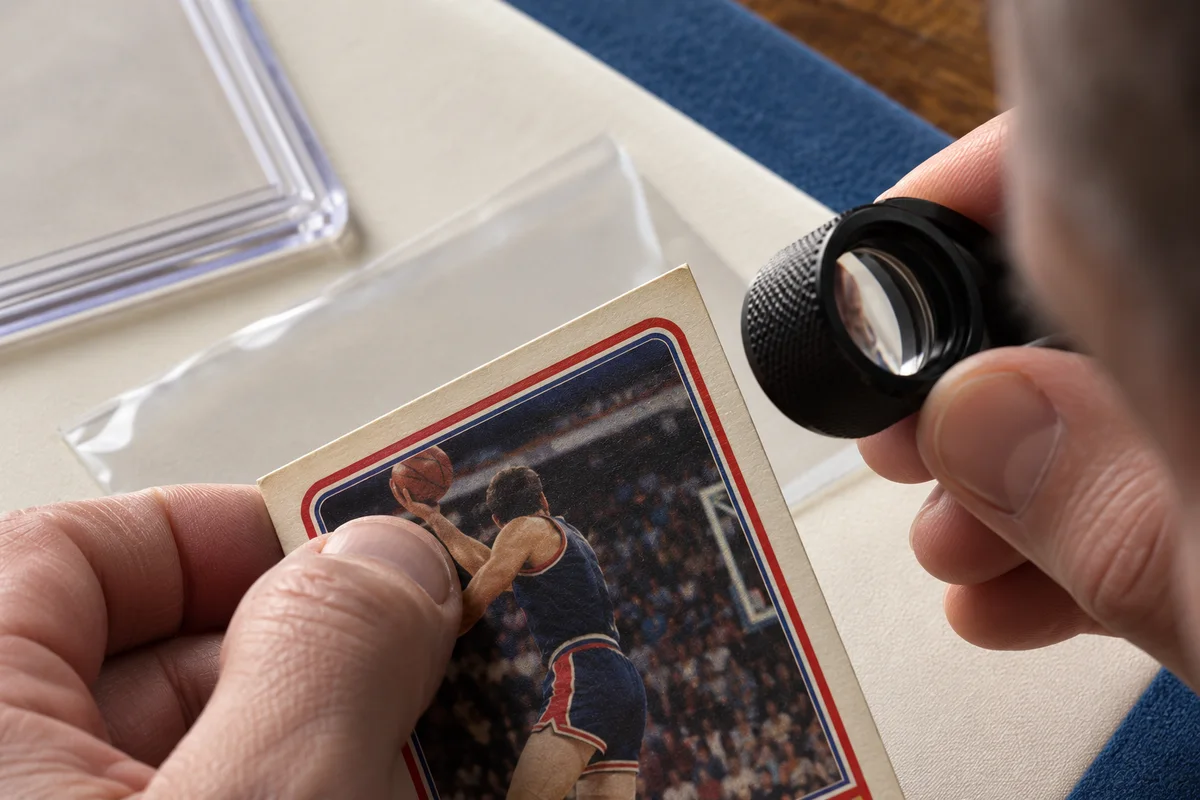
Read beyond the number
A graded card arrives sealed in a plastic holder with a crisp number on the label, and that number feels like the final word. It is not. The slab is one piece of evidence among several when deciding whether a card belongs in your collection. The numeric grade summarizes physical condition. Authentication and any alteration designation need to be read alongside it. None of these tells you a card's personal meaning, future price, or whether the person offering it is trustworthy.
What a Numeric Grade Actually Measures
A condition grade compresses several physical factors into a single figure. Graders weigh centering, corners, edges, and surface, then translate their assessment into a number or a named tier.
Centering describes how evenly the image sits within the borders. Corners can be sharp or softly rounded from handling. Edges may be clean or show chipping, and the surface can carry scratches, print lines, or gloss loss. Two cards can reach the same grade through different paths: one with excellent centering but a slightly soft corner, another with perfect corners but off-center borders.
PSA notes that grading involves judgment, including eye appeal, rather than measurement alone. That is why a grade is a summary, not a spec sheet. Treat the number as a starting point, then look closely at the card itself.
Authenticity Versus Condition
Authenticity and condition are two separate questions, and the grading process addresses both in different ways. Authentication evaluates whether the item is genuine; an authentic card may still have been altered. CGC, for example, has an Authentic Altered designation. A numeric condition grade describes the card's physical state under the grader's standards.
A card can be authentic yet low grade, or high grade and genuine. The numeric tier never implies that an item is fake or real on its own; the authentication step does that work. When you read a label, separate "is this the real card" from "how clean is this copy." Both matter, and they are not the same decision.
Why Standards and Terminology Differ
Graders do not share one universal scale, so the same words can carry different weight. Reading across companies requires knowing that terminology shifts.
CGC distinguishes a Pristine 10 from a Gem Mint 10, treating the top of the scale as more than one destination. Beckett describes four condition factors—centering, corners, edges, and surface and offers subgraded services that break a card into component scores, though not every holder carries subgrades. These are different vocabularies for the same underlying goal.
Reading the Label Against the Card
The label lists specifics for a reason: year, set, card number, and variation. Each of these must match the card inside and the photos you are shown before the number means anything to you.
Consider a hypothetical example. Two cards share the same player and the same grade, but one is the base version and the other a short-printed parallel from the same set. The grade is identical; the cards are not. Checking the card number and variation against the set listing tells you which copy you are actually looking at.
Photos matter just as much. A certificate lookup is one useful check, not a guarantee. PSA's certificate verification lets you compare a record against the slab in front of you, but you should also study the images and the holder itself. Confirm the record, the photos, and the physical holder all describe the same item.
Why Two Cards at the Same Grade Differ in Eye Appeal
Eye appeal is the quality a grade cannot fully capture. Within a single grade, one card can simply look better than another.
Imagine two cards graded the same, both genuine, both accurately labeled. One has rich color and bright gloss; the other is slightly dull with centering that technically passes but reads as lopsided. The number is equal; the viewing experience is not. This is where personal taste enters the decision.
For a collection you plan to enjoy, an appealing mid-grade card can satisfy you more than automatically chasing the highest number. A sharp, well-centered copy a tier or two down may please you every time you look at it, which is reason enough to choose it.
What a Grade Does Not Tell You
A grade is silent on the things collectors often most want to know. It does not measure personal meaning, and it never predicts future resale price. A card tied to a memory may matter more to you than its tier suggests.
The grade also says nothing about whether a particular seller is trustworthy. That judgment comes from the listing, the photos, the certificate record, and the holder together.
Read the number, then read everything around it. The most rewarding purchase is often the card you want to look at, matched correctly to its label, bought from a listing you have verified point by point.