A collection that could only be yours
A clear focus, a manageable want-list, and a record worth keeping. Build a collection around the cards and stories that matter to you.
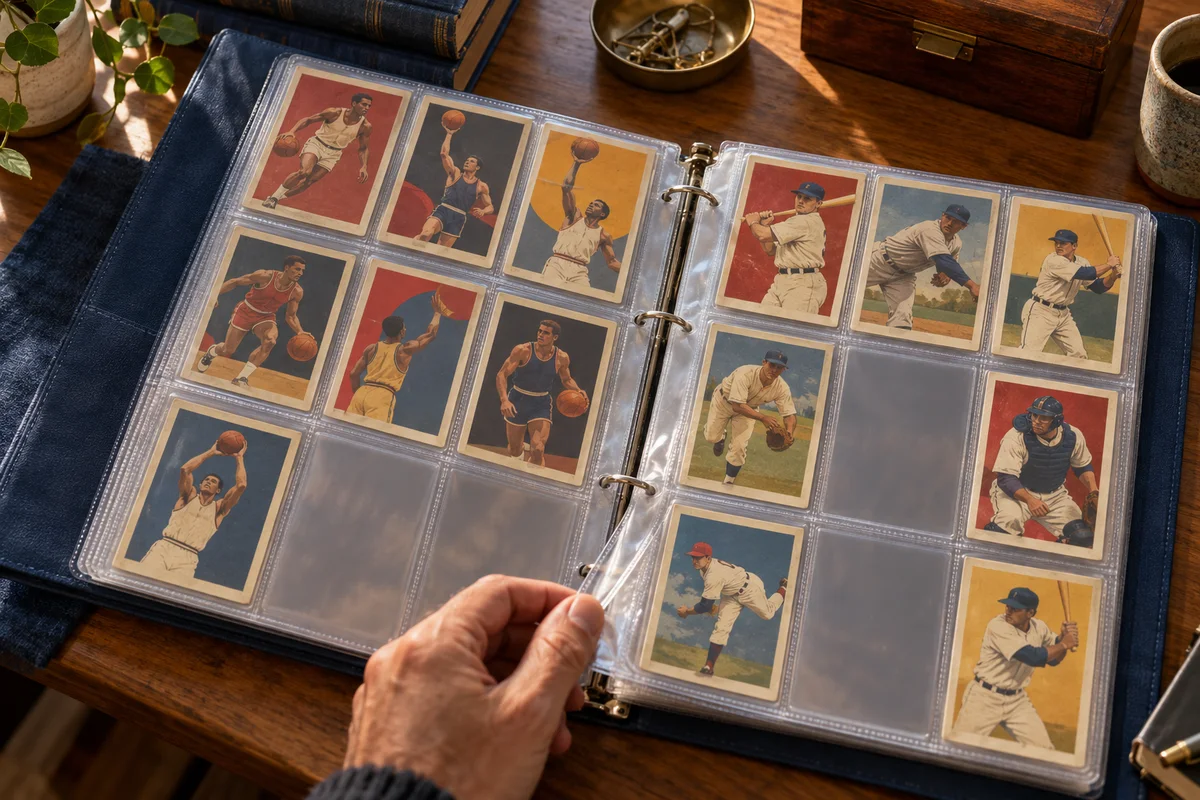
A collection with a clear idea
Walk into any card shop and the loudest noise comes from the chase cards: the numbered parallels, the autographs, the cards everyone photographs. But a personal card collection that actually satisfies rarely gets its identity from the single most expensive slab on the shelf. It gets identity from a point of view. The most enjoyable collections answer a simple question first: what is this collection actually about?
Start With a Point of View, Not a Price Tag
A collection with a point of view is organized around an idea rather than a chase. That idea can be almost anything you care about. For example, a collection could focus on every base card of one catcher across their career, a single team's rookies from one memorable season, or every card illustrated by a particular artist in a trading-card game.
Other collectors anchor on an era, a visual design they love, a specific character across sets, or one compact set they want to finish. None of these require the flashiest card in the room. They require a decision.
Before you buy anything else, write one or two sentences describing your collecting focus. For example: "This collection is base and insert cards of one franchise quarterback from draft year through retirement." That sentence becomes a filter. When a tempting release appears, you can ask whether it fits the statement or just the moment.
Choose a Manageable First Boundary
Ambition is cheap; boundaries are useful. A focus like "every card of a popular modern star" can grow beyond the time and attention you want to give it. A smaller boundary makes the project easier to enjoy.
Pick a first boundary you can actually complete or enjoy chasing. A tighter version might be "base rookies of one player from three specific sets" or "one 20-card insert set from a single year." You can always expand later. Starting narrow gives you early wins and a clearer sense of what you truly enjoy.
A want-list is a set of cards you have chosen to pursue. An obligation is a vague feeling that you should own something because other people value it. Keep those two ideas apart.
Record What Makes Each Card Meaningful
A coherent collection is also a documented one. For every card, note why it belongs. Maybe it completes a team's rookie run, maybe it is the design that first pulled you into the hobby, maybe it is an illustrator variant you searched for across several sets.
The meaning matters as much as the card. Writing it down turns a pile of cardboard into a collection with a narrative you can revisit.
Look-alikes can make an inventory confusing. The same photograph can appear across base, parallel, and insert versions with different card numbers, print runs, and finishes. Do not lump them together.
Confirm the exact product, year, card number, and variation before you log it. Two cards that look identical in a thumbnail can be entirely different entries in your collection.
Keep a Simple, Honest Inventory
You do not need specialized software to organize trading cards well. You need a consistent record. For each card, capture a few core fields so your collection stays searchable and separated by status.
Record the player or character, set, year, card number, and variation. Add the grading company, grade, and certification number where applicable; where and when you acquired the card; a clear image of the actual item; and its storage location.
Keeping owned, wanted, and duplicate cards in separate lists helps you spot a card you already have before buying another copy.
If you want a structured framework, PSA offers a first-party PSA Set Registry for organizing graded sets, and a PSA certification lookup to check a certification record. The lookup alone does not establish that an offered holder is genuine. These are optional tools, not requirements for a good collection.
Revisit the List Instead of Chasing Every Release
New products arrive constantly, and each one promises a reason to deviate. The healthiest habit is to return to your collecting statement and want-list before reacting to a release. Ask whether an item advances your focus or simply adds noise.
A focused personal card collection rewards you every time you look at it, because every card is there on purpose. When you catch yourself adding cards that no longer fit the point of view, that is not a failure. It is a signal to rewrite the statement and sharpen the collection you actually want.